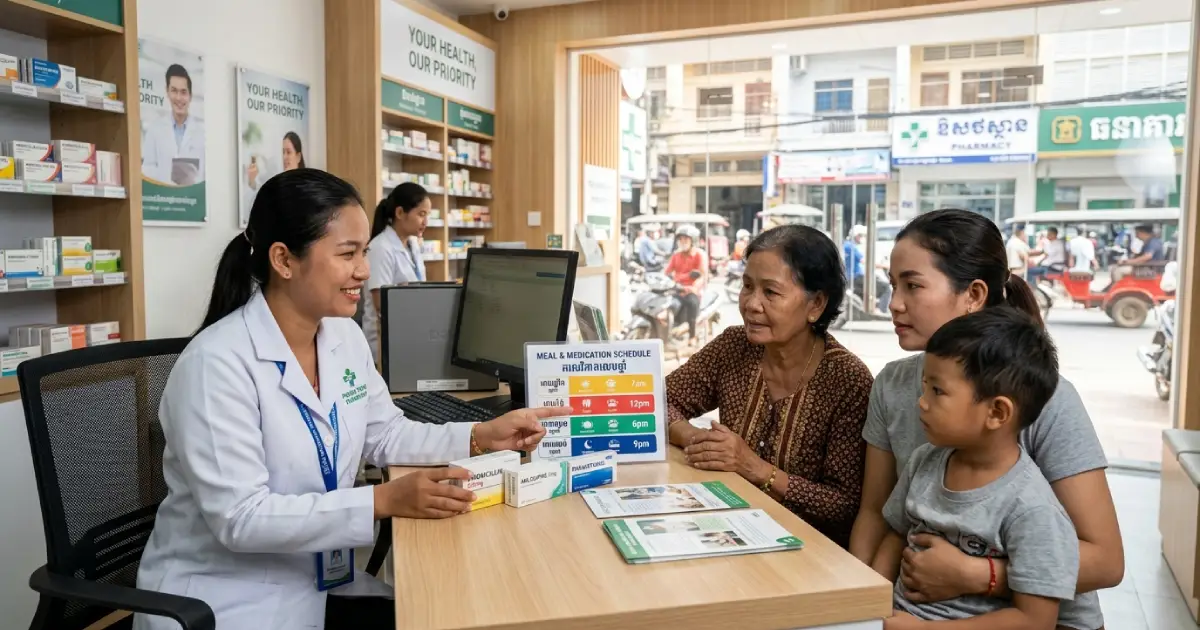
Before Meals or After? The Right Way to Take the Most Common Medicines in Cambodia
Many medicines work best when taken at the right time in relation to meals. Taking medication before food, after food, or on an empty stomach can affect how well it works. This guide explains the correct way to take the most commonly used medicines in Cambodia.
One of the most common questions pharmacists and doctors in Cambodia hear is: “Should I take this medicine before or after meals?”
The answer matters more than many people realize. Food can change how a medicine is absorbed, reduce its effectiveness, or increase the risk of stomach irritation. Understanding the correct timing can help medicines work safely and effectively.
This guide covers some of the most frequently used medications in Cambodia and when they should be taken.
Stay updated on health & medicines in Cambodia
Join our community for health tips, medicine guides and more.
Why Meal Timing Matters
Medicines interact with food in different ways:
- Some medicines are absorbed better on an empty stomach.
- Some need food to prevent stomach irritation.
- Others work regardless of meals but should be taken consistently.
In general:
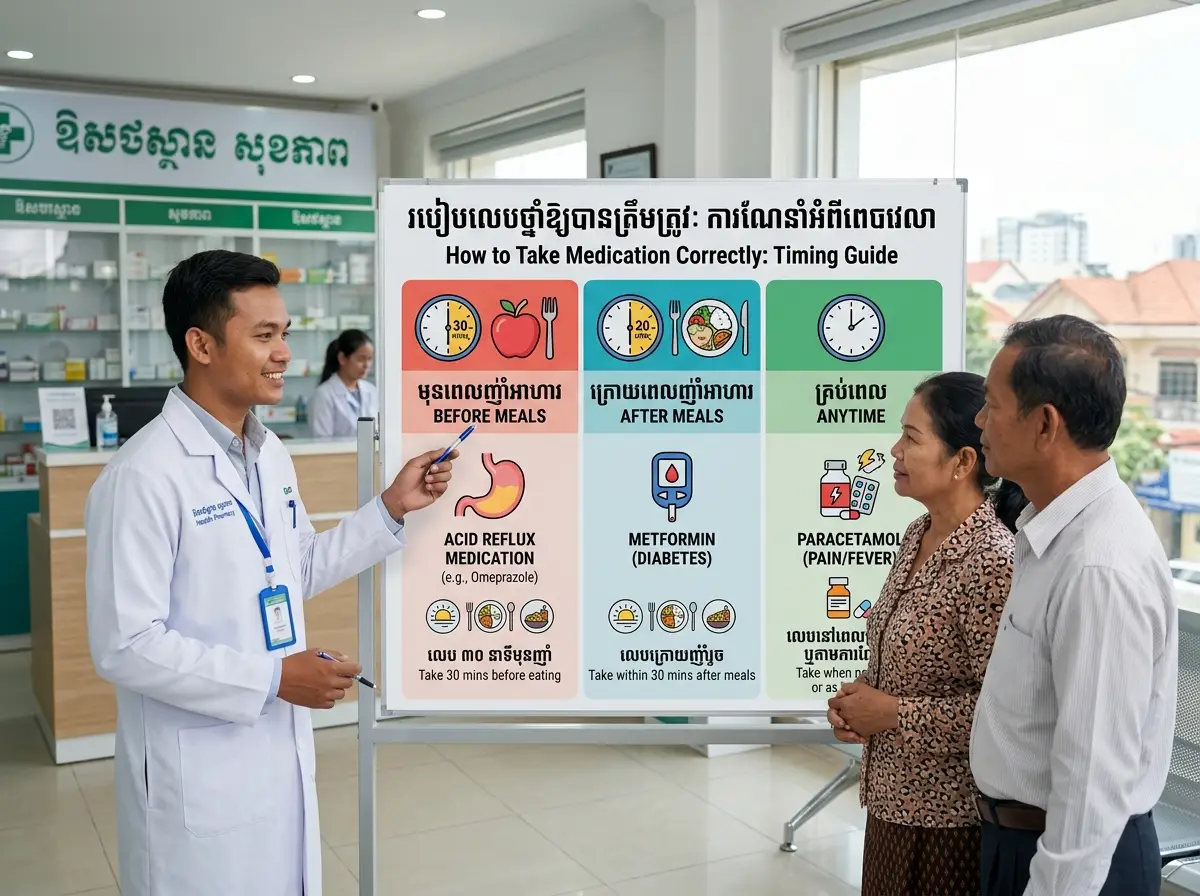
- Before meals means 30–60 minutes before eating.
- After meals means within 30 minutes after eating.
- With food means during a meal or immediately afterward.
- Empty stomach means at least 1 hour before or 2 hours after food.
Always follow the instructions provided by your doctor or pharmacist, as individual recommendations may vary.
Common Medicines That Should Be Taken Before Meals
1. Omeprazole and Other Acid-Reducing Medicines
Examples:
- Omeprazole
- Esomeprazole
- Pantoprazole
These medicines reduce stomach acid and work best when taken before food because they need to be absorbed before the stomach begins producing acid during a meal.
Best practice: Take 30–60 minutes before breakfast.
2. Certain Diabetes Medicines
Examples:
- Gliclazide
- Glimepiride
These medicines help lower blood sugar and are often taken before meals to match the rise in blood glucose that occurs after eating.
Best practice: Take shortly before breakfast or as directed by your doctor.
3. Some Antibiotics
Examples:
- Ampicillin
- Cloxacillin
Food can reduce the absorption of these antibiotics.
Best practice: Take on an empty stomach unless otherwise instructed.
Common Medicines That Should Be Taken After Meals
1. Pain Relievers and Anti-Inflammatory Medicines
Examples:
- Ibuprofen
- Diclofenac
- Naproxen
These medications may irritate the stomach lining.
Best practice: Take after meals or with food to reduce stomach discomfort and the risk of gastritis.
2. Metformin
Metformin is widely prescribed for type 2 diabetes.
Taking it with food helps reduce common side effects such as:
- Nausea
- Stomach upset
- Diarrhea
Best practice: Take during or immediately after meals.
3. Iron Supplements
Iron supplements can cause stomach irritation and nausea in some patients.
Best practice: Although absorption is highest on an empty stomach, many patients tolerate iron better after meals. Follow your healthcare provider’s advice.
Medicines That Can Usually Be Taken With or Without Food
1. Paracetamol (Acetaminophen)
Paracetamol is commonly used for:
- Fever
- Headache
- Body aches
It can generally be taken with or without food.
Best practice: Follow the recommended dose and avoid exceeding daily limits.
2. Most Blood Pressure Medicines
Examples:
- Amlodipine
- Losartan
- Enalapril
Most can be taken regardless of meals.
Best practice: Take them at the same time every day for consistent blood pressure control.
3. Antihistamines
Examples:
- Cetirizine
- Loratadine
These allergy medicines can generally be taken with or without food.
Medicines and Foods That Should Not Be Mixed
Grapefruit and Certain Medicines
Grapefruit may interfere with medicines such as:
- Some cholesterol-lowering drugs
- Certain blood pressure medicines
This interaction can increase medicine levels in the body.
Dairy Products and Some Antibiotics
Examples:
- Doxycycline
- Tetracycline
Milk, yogurt, and calcium supplements can reduce absorption.
Alcohol and Medicines
Alcohol may interact with:
- Sleeping pills
- Pain medications
- Diabetes medicines
- Some antibiotics
Always check with your healthcare provider before combining alcohol with medications.
Tips for Taking Medicines Correctly
- Read the medication label carefully.
- Follow your doctor’s instructions exactly.
- Ask your pharmacist if meal timing is unclear.
- Use reminders to avoid missed doses.
- Never double a dose if you forget one unless instructed.
- Inform your healthcare provider about all medicines and supplements you take.
Frequently Asked Questions
Key Takeaway
Taking medicine at the correct time in relation to meals is an important part of treatment success. Acid-reducing medicines and some antibiotics often work best before meals, while medications such as metformin and anti-inflammatory pain relievers are usually better tolerated after food. When in doubt, ask a qualified healthcare professional or pharmacist to ensure you are taking your medicines safely and effectively.
This article is for general education purposes only and does not constitute medical advice. Always consult a qualified healthcare professional or pharmacist before making any health decisions.
Related articles
Why Taking Your Full Course of Antibiotics Could Save Your Life — Even When You Feel Better After 3
Why You Should Never Crush a Tablet Without Asking Your Pharmacist First