How to Protect Your Family from Dengue Fever in Cambodia: Prevention Tips for Every Household
Dengue fever cases rise every rainy season in Phnom Penh. Learn how Cambodian families can protect their homes from mosquito breeding, recognize early warning signs, and know exactly when to seek medical care for a loved one.
Why Dengue Fever Is a Serious Concern for Cambodian Families
Every year, as the rainy season arrives between May and October, hospitals across Phnom Penh and the provinces see a sharp rise in dengue fever cases. Cambodia's warm, humid climate and frequent rainfall create ideal breeding conditions for Aedes aegypti, the mosquito species that spreads the dengue virus. Children under 15 are especially vulnerable, but adults are not immune, and repeat infections can be more dangerous than the first.
As a physician who treats dengue cases throughout the wet season, I want every household in Cambodia to understand that most severe cases are preventable. Protecting your family starts at home, with a few consistent habits that take only minutes each week.
How Dengue Spreads in Cambodian Neighborhoods
The Aedes mosquito is a daytime biter, most active in the early morning and late afternoon, and it breeds in still, clean water rather than dirty drains. This is why dengue often spreads quickly in residential compounds: water jars, flowerpot trays, discarded tires, and blocked gutters around a single home can produce hundreds of mosquitoes within a week.
Because the mosquito rarely travels more than 100 to 400 meters from where it hatches, one uncovered water container in your yard can put your entire street at risk. Community-wide prevention is just as important as protecting your own household.
Stay updated on health & medicines in Cambodia
Join our community for health tips, medicine guides and more.
Household Prevention: The 3-Step Approach
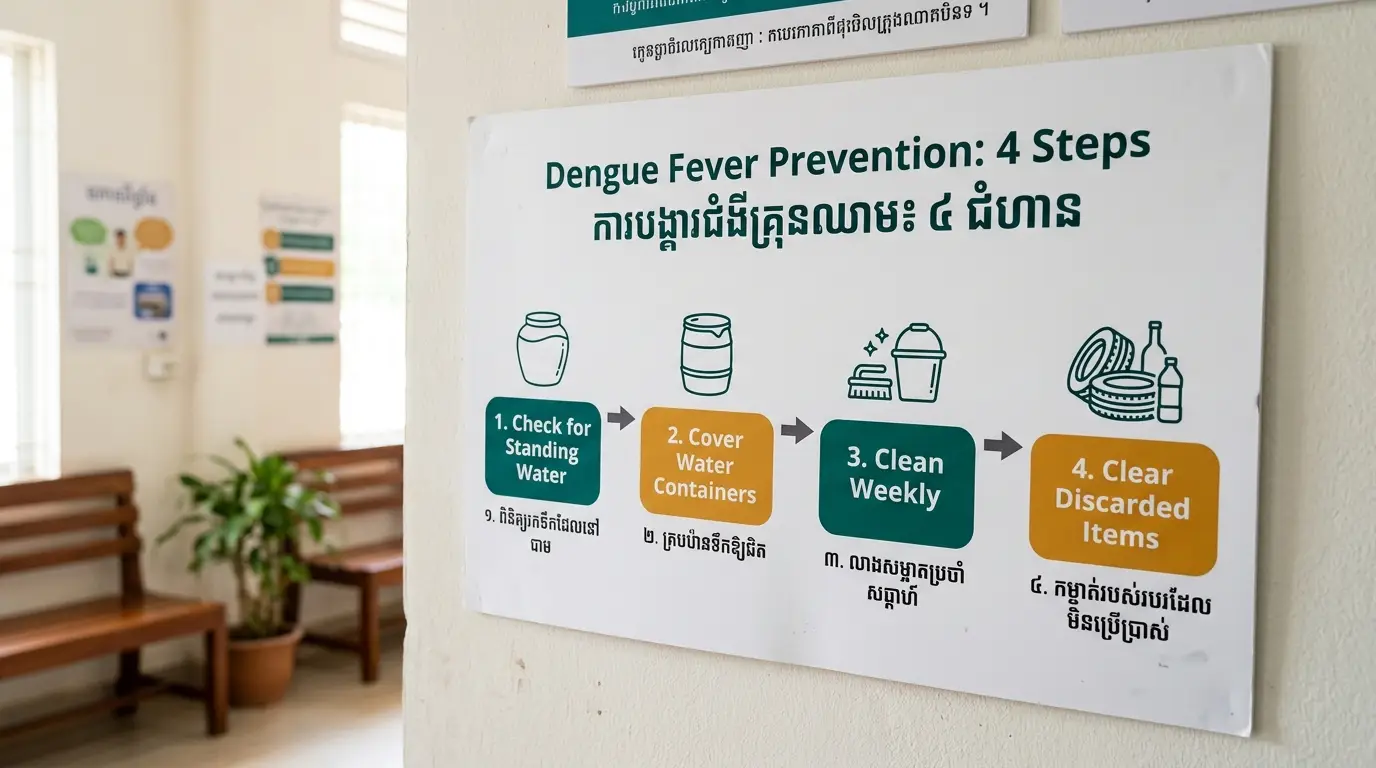
Cambodia's Ministry of Health recommends a simple routine that every household can follow. I encourage my patients to make this a weekly habit, ideally on the same day each week so it becomes automatic.
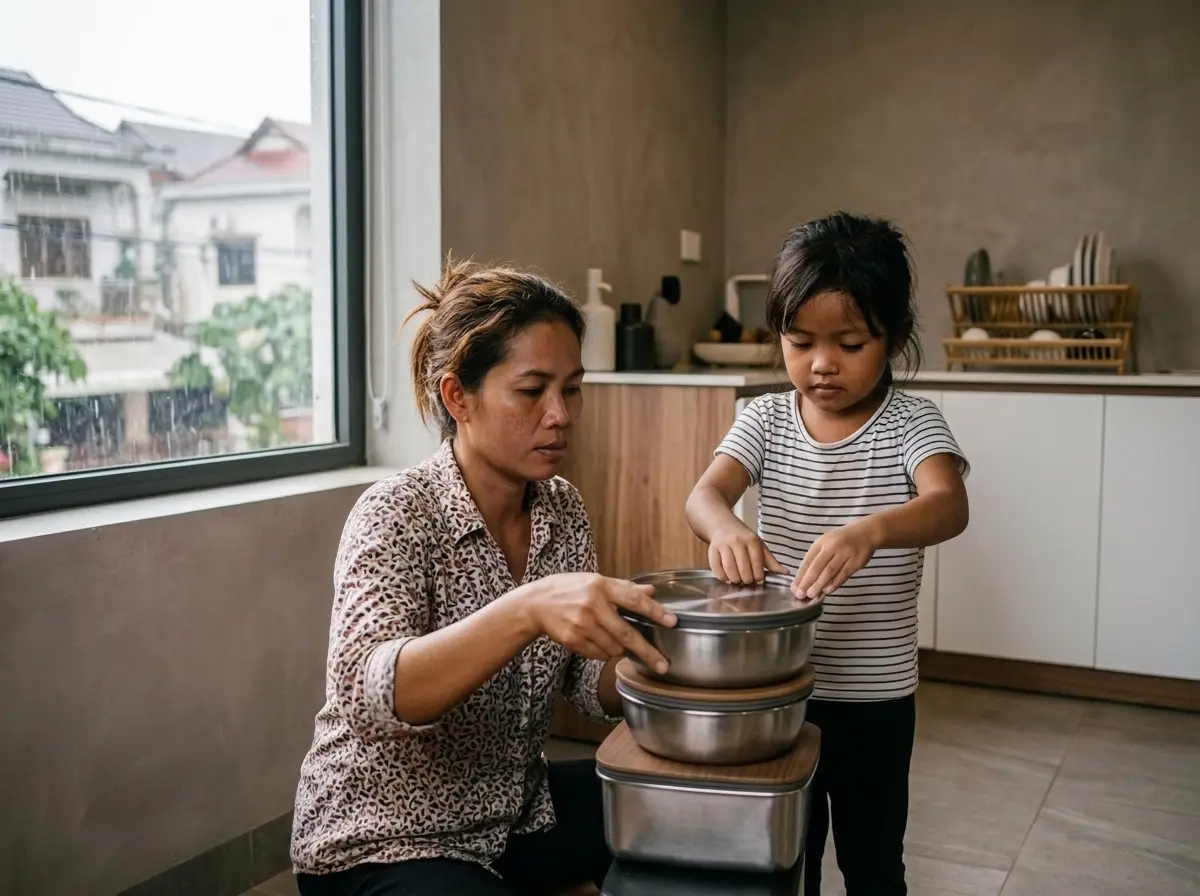
- Cover: Seal water storage jars, buckets, and tanks with tight-fitting lids so mosquitoes cannot lay eggs inside.
- Clean: Empty and scrub flowerpot trays, pet water bowls, and any container that collects rainwater at least once a week.
- Clear: Remove old tires, cans, bottles, and other discarded items around the home and yard where water can collect after rain.
In addition to these three steps, install or repair window and door screens where possible, use mosquito nets while sleeping (especially for infants and daytime naps), and apply an approved insect repellent to exposed skin when spending time outdoors during peak biting hours.
Recognizing the Warning Signs of Dengue Fever
Early recognition saves lives. Dengue typically begins with a sudden high fever lasting two to seven days, along with several of the following symptoms:
- Severe headache and pain behind the eyes
- Muscle, joint, and bone pain (sometimes called "breakbone fever")
- Nausea, vomiting, or loss of appetite
- Skin rash appearing three to four days after fever onset
- Mild bleeding, such as nose or gum bleeding, or easy bruising
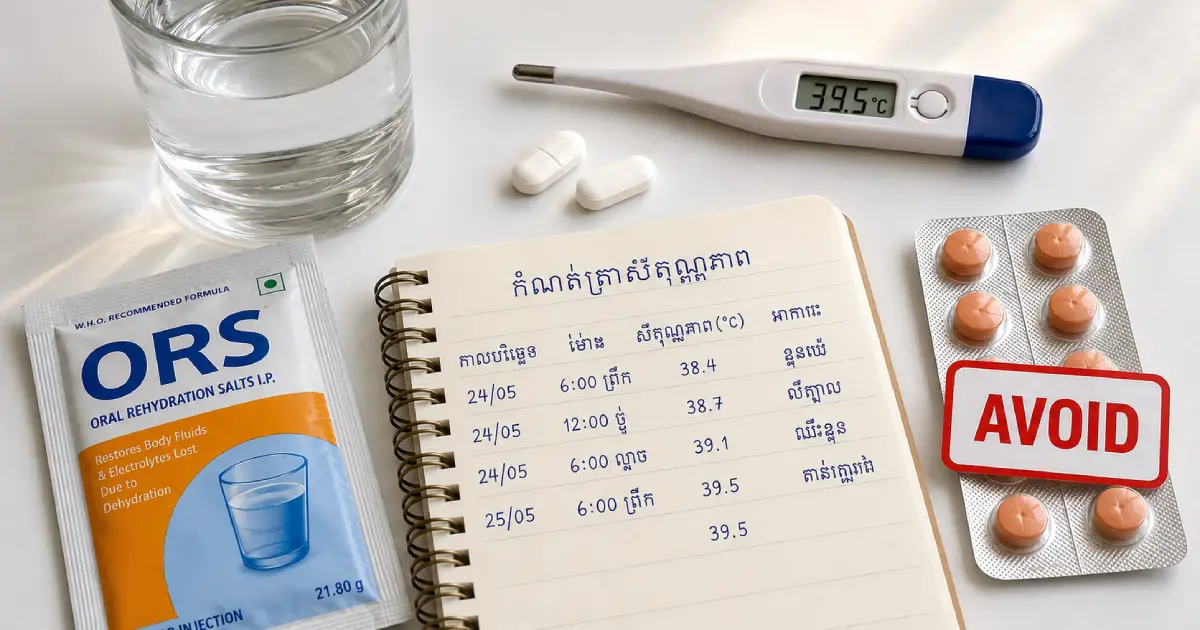
Most cases resolve with rest, fluids, and paracetamol for fever. However, a smaller number of patients develop severe dengue, usually as the fever begins to subside. This is the most dangerous phase and requires immediate medical attention.
Warning Signs That Require Immediate Medical Care
Take your family member to the nearest hospital or clinic right away if you notice any of the following, particularly on days three to seven of illness:
- Severe abdominal pain or persistent vomiting
- Bleeding from the gums or nose, or blood in vomit or stool
- Difficulty breathing or extreme fatigue
- Cold, clammy skin or restlessness and irritability
- Any noticeable drop in body temperature accompanied by worsening symptoms
Never give aspirin or ibuprofen to someone with suspected dengue, as these medications can increase the risk of bleeding. Paracetamol at the correct dose is the safer choice for fever and pain relief while you seek medical advice.
Extra Precautions for Children, Pregnant Women, and Older Adults
Young children, pregnant women, and people over 60 face a higher risk of complications from dengue. For these groups, I recommend seeking medical evaluation promptly at the first sign of fever rather than waiting to see if symptoms improve at home. Pregnant women in particular should never self-medicate and should consult a physician immediately, since dengue during pregnancy requires careful monitoring for both mother and baby.
Protecting Your Whole Community
Because mosquitoes do not respect fences, household prevention works best when neighbors act together. Coordinate with your neighborhood or village chief to organize a community clean-up day, report large stagnant water sites such as construction pits or abandoned lots to your local health center, and support municipal larviciding and fogging campaigns when they are announced in your area.
Frequently Asked Questions
Key Takeaways
- Follow the Cover-Clean-Clear routine weekly to eliminate mosquito breeding sites around your home.
- Dengue fever spreads through daytime-biting Aedes mosquitoes that breed in clean, still water, not dirty drains.
- Watch closely for warning signs as fever subsides, especially severe abdominal pain, bleeding, or breathing difficulty.
- Use paracetamol for fever, never aspirin or ibuprofen, and seek medical care immediately for severe symptoms.
- Children, pregnant women, and older adults should be evaluated promptly at the first sign of fever.
- Community-wide action, not just individual households, is essential to controlling dengue outbreaks in Cambodia.
This article is for general education purposes only and does not constitute medical advice. Always consult a qualified healthcare professional or pharmacist before making any health decisions.
Related articles